By Mara Nathan, For the Express-News Aug 14, 2025
Though they are sacred to me and many others, the Ten Commandments have no
place on the walls of our public-school classrooms.
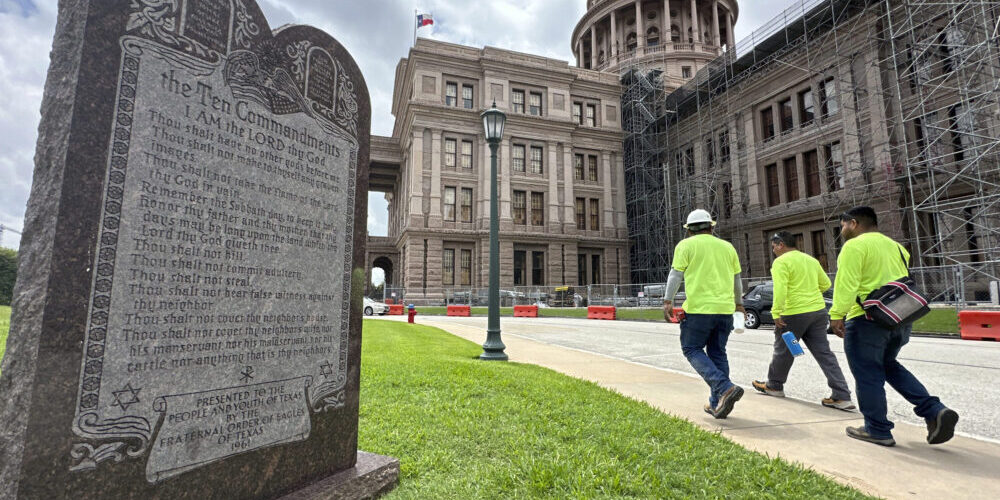
Texas Senate Bill 10 requires displays of a Christian version of the Ten Commandments to be
hung in a “conspicuous place” in every public-school classroom in the state. The law, if
implemented, will create an atmosphere of religious exclusion and coercion in our schools.
Jewish communities have been an integral part of the American fabric since the founding of our
nation.
In a 1790 letter to the Touro Synagogue in Newport, R.I., President
George Washington affirmed the right of religious liberty for all and
explained, “For happily, the Government of the United States, which gives to
bigotry no sanction, to persecution no assistance, requires only that they
who live under its protection should demean themselves as good citizens in
giving it on all occasions their effectual support.”
As a rabbi, a mother and a Jewish resident of Texas, I believe that Texas
Senate Bill 10, which requires displays of a Christian version of the Ten
Commandments to be hung in a “conspicuous place” in every public school
classroom in the state, not only violates the spirit of Washington’s words but
will create an atmosphere of religious exclusion and coercion in our schools.
That is why I have decided to sue to stop my child’s school from
implementing the law.
My child is one of only a few Jewish students in their grade. The same is
true for many of the children whose families attend Temple Beth-El, where I
am the senior rabbi.
Jewish students throughout San Antonio attend synagogue with their
families to celebrate the Sabbath and Jewish holidays. They connect with
other Jewish teens to learn about their culture and history, and volunteer in
the Jewish community and on behalf of the community.
School is a place where they can enjoy friendships with people of many
faiths, many cultural backgrounds and many ethnicities. These children
respect that there is a difference between learning about each other’s
cultural traditions and feeling as if they are compelled to adopt them.
Public schools are intended to be places of learning where all students,
regardless of their faith or lack thereof, have the freedom to focus on their
intellectual growth, explore new areas of interest in athletics, the arts and
sciences, and learn life skills such as critical thinking, personal accountability
and communal responsibility.
The motto of my child’s school district, “Live Honorably; Act Humbly;
Model Dignity,” encompasses those goals in a way that honors the rich
tapestry of diverse cultural expressions in San Antonio and throughout
Texas. SB10 undermines this mission, conveying to students that good
character and kindheartedness can only be achieved if you adhere to a
Christian rendering of the Ten Commandments.
One of the strengths of Texan culture is the rich historical, cultural and
religious diversity that can be experienced within the almost 270,000 square
miles of our great state.
No one faith, no one culture, no one perspective should be canonized as
more holy than others. By assuming a particular Christian perspective, SB10
not only promulgates an officially preferred religious doctrine but attempts to
compel all public-school students to adopt that doctrine as their own.
Just as the first American president pledged to protect religious freedom
throughout the United States, Texas should allow its residents to make their
own decisions about how to impart religious truths to our children.
Though they are sacred to me and many others, the Ten Commandments
have no place on the walls of our public-school classrooms.
Mara Nathan is senior rabbi at Temple Beth-El in San Antonio.